Sunday, April 17, 2011

Senator Sotto bats for the establishment of penitentiary for drug offenders

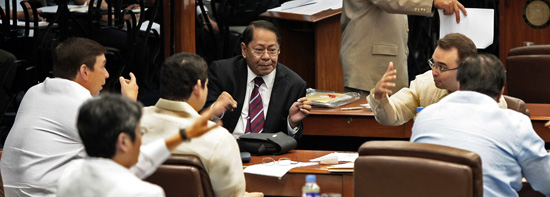
SENATE OFFICE, Manila, April 18, 2011-Senate Majority Leader Vicente C. Sotto III bats for the establishment of a penitentiary solely for the drug offenders in the country under the supervision of the office of the national penitentiary.

The Senator has filed resolution number 12 for the establishment of regional penitentiary for drug offenders where convicts and those accused for violation of Republic Act. No. 9165, otherwise known as the Comprehensive Dangerous Drugs Act of 2002, shall be detained.

“There is an urgent and indispensable need to come up with measures to address the peculiarity of the rehabilitation and security requirement for drug offenders,” he said.

Sotto said that considering the fact that drug offenders comprise 70% of the inmates in the city jails and national penitentiaries, it cannot be discounted that illegal drugs trade continue to thrive even to those already behind bars.

He furthered that there is a need for the total overhauling in the jail system; thus, he reiterated over and over again for the overhaul and revamp in the jail system, saying that the only solution is to create a drug penitentiary for drug offenders.

“Someone should be accountable for this appalling situation that is sending a wrong signal that our justice system does not work,” he said, adding that drug offense is a special kind of crime and it requires a special rehabilitation program and security protocol for its offenders.

“There should be arrests, prosecutions and rehabilitations for the anti-illegal drug programs to become successful where the creation of the regional penitentiaries will be under the supervision of the Office of the National Penitentiary for Drug Offenders.

“This measure will surely help to eradicate drug problems,” he said. (Jason de Asis)

Saturday, April 16, 2011

Legarda lamented on the IPs died in cholera outbreak; urged DOH to control the disease in Palawan

SENATE OFFICE, Manila, April 17, 2011-Senator Loren Legarda, Chair of the Committee on Cultural Communities lamented on the indigenous people who died due to cholera outbreak where the majority of the children were affected in Palawan; thus, the Senator urged the Department of Health (DOH) to act swiftly by intensifying effective disease surveillance, control and prevention measures as the death toll continues to rise.

“The DOH should act swiftly in pointing out the exact source of the disease,” Legarda said, adding that the Cholera disease is preventable and easy to treat. It did not have to lead to the morbidity of a significant number of people, saying that this is an indication of the lack of proper medical services and health education being provided to our indigenous communities.

A cholera outbreak was declared by DOH in the entire town of Bataraza, Palawan, when 17 out of its 22 barangays showed cases of diarrhea, a symptom of cholera, along with severe stomach pains and vomiting. The DOH monitored at least 430 cases of diarrhea in the province, a majority of the patients tested positive for vibrio cholera, a bacterium which causes cholera in humans.

As of April 13, a total of 19 people have been killed by the disease from March 1 to April 12, 2011 according to DOH, saying that following this number, at least 7 out of 10 were children under 5 years old.

 “These numbers are alarming. What is more painful is that the deaths could have been prevented if early detection, control and remedial measures were immediately done,” Legarda said.

Legarda stressed the importance of having health workers in every barangay in the country to ensure that even those in far-flung communities can avail of proper medical attention in their respective localities. “Health workers presence is needed in the barangay for their safety,” she said.

“There is a need for the government to address this concerned,” Legarda furthered, saying that she proposed measure filed in the Senate (Senate Bill 1384) that seeks to mandate the Department of Health to provide at least one health worker in every barangay.

The Senator concluded that our indigenous brothers and sisters who live in far-flung areas need to have access to medical services. They also need to be informed of proper sanitation practices and emergency response.

There is also a need to squeeze out concern over the consequences of climate change that affects the lives of the IP who are threatened by extreme weather events brought by climate change as they are more vulnerable to their livelihood, health, food security, cultural integrity and lands. (Jason de Asis)

Angara urges leading financial firms to help spur Phl economic growth

SENATE OFFICE, Manila, April 17, 2011-Senator Edgardo J. Angara urged the country’s leading financial firms to help enhance credit to ensure the Filipinos to have the means to fuel their prosperity, and provide an instrument to help in economic recovery, following his calls to increase the availability of credit to small and medium scale entrepreneurs in order to spur the country’s economic growth.

In his keynote speech in the 30th National Credit Congress sponsored by the Credit Management Association of the Philippines, he explained that while the Philippines wasn’t hit as badly as other ASEAN countries in the worldwide economic crisis, local financial institutions still needed to restrict access to credit.

“In our country we saw the most visible effect of the global financial crisis was the tightening of credit, it became harder to obtain loans for both business and households. This held enormous consequences not only for sustaining the growth of enterprises and welfare of families, but also for helping to survive a profound economic shock,” Angara said.

He furthered that the people who need it most are the entrepreneurs, farmers and households in rural areas who have the most difficulty in acquiring credit, due to their lack of a good credit standing.

 “We have to advocate for inclusive finance to ensure that our rural folks also cash in on the benefits of progress if we push for inclusive growth.  The microfinance, micro-agri loans and micro-insurance are the emerging needs in our countryside which we must seek to provide if we want to achieve a healthy economy,” Angara added.

Earlier, the volume of microfinance activity has grown in the country and an increasing number of financial institutions have engaged in retail microfinance operations for the last few years.

This sector has been traditionally dominated by rural banks, non-governmental organizations (NGOs) and finance cooperatives. In 2009 a number of commercial banks sought entrance into the retail microfinance market according to Asia Focus report reviews about the growth of the Philippines microfinance industry and discusses the implications of commercial banks entering this market. (Jason de Asis)

Mobile SP sessions, boosts to Nueva Ecijanos says vice gov. Padiernos

STA. ROSA, Nueva Ecija, April 17, 2011-To fast-track the delivery of basic services to Novo Ecijanos, Vice Gov. Jose Gay Padiernos has defended the move of the Sangguniang Panlalawigan to transfer the venue of the weekly SP sessions to various municipalities and cities of the province from the seat of the Capitol in Palayan City.

“The mobile SP session is one way of giving the provincial board members a direct pulse of the needs and sentiments of a particular locality instead of just dealing with documents submitted to them during sessions at the SP session hall in Palayan,” Padiernos said.

“If the provincial government conducts fiesta caravans in various towns and cities where services are downloaded, we at the SP also feel that by conducting mobile sessions, we can readily identify the needs of the people and address them in their own homecourt,” he said.

He said deliberating on various requests for appropriations in SP sessions in Palayan does not exactly serve its purpose because “it’s hard to approve allocations for projects merely based on documents.”

Nevertheless, he said a skeletal force has been left at the SP office in Palayan to attend to the needs of visitors from other places.

Padiernos defended the move during a SP regular session at the session hall of the Sangguniang Bayan in this town, the hometown of Gov. Aurelio Matias-Umali and his wife, third district Rep. Czarina Umali, his brother Board Member Emmanuel Anthony Umali and cousin, Board Member Peter Marcus Matias. It was the fourth out-of-town session of the SP since it was held earlier in the towns of Cuyapo, Lupao and Penaranda.

During the session, the SP approved the request of Mayor Otep Angeles, Vice Mayor Irene Bernardo and the municipal government for the allocation of funds for 40 housing units. Half of the units will be funded by Governor Umali and the other half by Congresswoman Umali.

Padiernos described the present SP as a working SP which deliberates on measures without any political color and appropriates funds for funding requests irregardless of political affiliations of the requesting party. He cited the case of Angeles who belongs to another party apart from the Lakas-dominated SP.

He said that with all due respect to the previous SPs, the current SP is on a work mode a hundred percent and there is no room for politics here. (Jason de Asis)

Friday, April 15, 2011

DPWH region 3 assured safe travel in the observance of Lenten season in Central Luzon

SAN FERNANDO CITY, Pampanga, April 16, 2011-Assistant  Secretary  for Operations  and  concurrent DPWH Region III OIC  Alfredo  Tolentino has ordered all his district engineers  to clear the main roads  of all kinds of obstructions like tree trunks, signages  and stalled vehicles here in Central Luzon as the Lenten season is coming saying that the influx of motorists and vacationists will increase and are expected to come to their respective hometown.   

In case of accidents, Tolentino instructed his district engineers to make available round the clock qualified mechanics on board heavy equipment and official vehicles to assist   the travelers.  

Tolentino said that the District Engineers are set to deploy and to put on stand-by for 24 hour basis, heavy equipment  in accident prone areas, particularly the Dalton Pass in Nueva  Ecija and other  steep roads in Aurora.

Starting this April 17 to April  25, the motorist  assistance teams composed of Land Transportation Office, Law enforcers, radio groups, NGO’s among others  will  be  assigned  in strategic    locations  in their provinces to ensure the safe travel of motorists.

He said that other civic action groups again activated the “Oplan Bantay Lakbay” to ensure the safety of motorists and vacationists. (Jason de Asis)

Food and fuel hike are threats to country’s development says Angara

SENATE OFFICE, Manila, April 16, 2011-Senator Edgardo J. Angara, Chair of the Congressional Commission on Science Technology and Engineering (COMSTE), urged the government to invest more in using science and technology (S&T) to help the country in dealing with the problems caused by continues uprising costs of fuel and food as well as disaster preparedness, saying that these are threats to the development of the Philippines which merits only little attention by the government.

Angara issued the statement in the light of the announcement from the Asian Development Bank (ADB) stating that the discussions of its upcoming annual meeting center on the rising costs of food and fuel.

He said that the ADB reported that high food and fuel prices are complicating economic and monetary policymaking and are being compounded by the region’s challenges. These other challenges include natural calamities like floods and earthquakes. 

The ADB also said that the ADB’s upcoming annual meeting of its board of governors in Hanoi, Vietnam, will assess these immediate and long-term hurdles with ministers and senior government officials, business leaders, fellow international financial institutions, and civil society representatives.

“These issues can be tackled by using S&T solutions, which COMSTE has been promoting,” Angara said, saying that the COMSTE has identified the development of electric vehicles and green transport as priority projects of the commission for 2011.

“Innovative Green transport systems like electric tricycles, hybrid jeepneys, buses and electric bicycles have the potential to lessen pollution caused by conventional transportation and the dependency on fossil fuels,” Angara said.

He added that one major target should be achieving food security where the COMSTE is working on plans to help develop improved farm to market logistics as well as creating more resilient agricultural systems that can withstand climate change.

Angara furthered that another COMSTE project is the Disaster Science Management Center (DSMC) which is ready to assist in preparing the nation for dealing with disasters like the devastating earthquake that recently hit Japan, now that it is in possession of the Metro Manila Earthquake Impact Reduction Study (MMEIRS), a report on the safety of the Bataan Nuclear Power Plant and a Disaster and Complexity study.

The MMEIRS is a joint study that was undertaken by the Philippine Institute of Volcanology and Seismology (PHIVOLCS), the Japan International Cooperation Agency (JICA) and the Metro Manila Development Authority (MMDA) to create an earthquake scenario damage map of Metro Manila while the DSMC help us to prepare for earthquakes, typhoons and similar disasters that will continue to threaten the country.

“The government needs to be able to understand how to develop an advanced and real-time information dissemination strategy, so people can better prepare to handle such events,” Angara said. (Jason de Asis)

Thursday, April 14, 2011

Legarda urged to fast-track implementation of total plastic ban

SENATE OFFICE, Manila, April 15, 2011-Even before her proposed measure is enacted into law, Senator Loren Legarda, Chair of the Senate Committee on Climate Change urged the government to fast-track the implementation of total plastic bag ban, saying that the national government can set an example by prohibiting the use of non-biodegradable plastic bags in their respective offices, while local government units (LGUs) can start by creating their own laws and ordinances in their respective jurisdictions.

Legarda, who recently filed Senate Bill 2759 otherwise known as the Total Plastic Bag Ban Act that seeks to prohibit the use of non-biodegradable plastic bags by groceries, supermarkets, public markets, restaurants, fast food chains, department stores, retail stores and other similar establishments nationwide.

The Senator said that there is a need for all of them to be effective models as precedent, stressing that local and chief executives’ are servants of the citizenry where they should set an example and show to our countrymen that this plastic bag ban can effectively be done in all public schools, hospitals, and government offices so the whole country will easily follow suit. 

Legarda added that there is a need to ensure that this new lifestyle and way of thinking is implemented in all households in the barangay and municipal levels where she also urged the local government units to fast-track the passage of their own versions of the total plastic bag ban.

“The City Government of Muntinlupa is now implementing the total plastic bag ban in their city while the Municipality of San Francisco in Camotes Island, Cebu has recently implemented the “no free plastic” program to force citizens to use re-usable bags,” the Senator said.

“There are numerous alternatives to non-biodegradable plastic bags. We have our baskets, bayongs, eco-bags, paper bags, cloth bags or katsa, bags made of recycled tetrapacks, and many others. We just have to be innovative and ingenious in finding substitute packaging materials or containers,” she explained. (Jason de Asis)

Electric vehicles to lessen air pollution and to fight fuel costs says Angara

SENATE OFFICE, Manila, April 15, 2011-To step towards ending oil dependency and fighting pollution in the country, Senator Edgardo J. Angara, Chair of the Congressional Commission on Science and Technology and Engineering (COMSTE), lauded the Asian Development Bank (ADB)'s electric tricycle project (e-trike project) in line with the government’s National Electric Vehicle Strategy which aims to replace conventional modes of transport with more environmentally friendly options.

“COMSTE has identified the development of electric vehicles and green transport as priority projects of the commission for 2011,” Angara said, adding that the innovative Green transport systems such as electric tricycles, hybrid jeepneys, buses and electric bicycles have the potential to lessen pollution caused by conventional transportation and the dependency on fossil fuels.

“We import roughly 96% of our petroleum and the majority is consumed by the growing transport sectors where they account for the biggest share of the energy use, nearing to 40%,” Angara said, explaining that to lay out plans for developing the e-vehicle industry, including petitioning the ADB to source the design and manufacture of e-trikes to local suppliers and manufacturers, COMSTE is partnered with the Electric Vehicle Alliance of the Philippines (EVAP), which met with the Clean Air Initiative Asia (CAI-Asia) and various government agencies and industry players.

“E-trike owners will save approximately 200 pesos a day in fuel costs. Petroleum-fueled trikes cost use 5 liters of fuel a day, at a cost of PHP 230 ($5) vs. a daily cost of PHP 30 (66 cents) to recharge the lithium batteries,” he furthered.

Kunio Senga, director general of ADB's Southeast Asia Department said that once thousands of e-trikes begin to be manufactured, many new jobs could be created, saying that by working together, we can give Manila cleaner air, bluer skies, and a more livable environment.

“The Philippines is assuming a leading role in Asia in supporting green transportation alternatives, and if e-trikes are followed by new fleets of electric buses and jeepneys, the effect could be transformative,” he said.

Senga furthered that the new e-trikes utilize lithium ion batteries, instead of heavier and environmentally-unfriendly lead acid batteries used in earlier e-trike models. The weight of the lithium ion battery is approximately 40 kilos, compared against 140 kilos for lead acid batteries of equal capacity – the equivalent weight of two adult passengers.

He said that the cost of lithium batteries is almost double that of lead acid batteries, their operational life is 15 times longer. (Jason de Asis)

Umali and Padiernos urged local executives in Nueva Ecija for drug test

GAPAN CITY, April 15, 2011-To dramatize the provincial government’s all-out drive against drug syndicates in Nueva Ecija, Gov. Aurelio Umali and Vice Gov. Jose Gay Padiernos urged the local chief executives in the province to help fight illegal drugs where they started subjecting themselves to a drug test even as they led thousands of Novo Ecijanos in a fun run in this city’s streets.

Umali accepted the call of Interior and Local Governments Secretary Jesse Robredo for the local officials to undergo drug tests if only to deliver the message that they clean of the drug menace and thus, have the moral ascendancy to lead the crusade against illegal drugs.

The governor said that he is in favor for the local executives to have the drug test a long time ago and his position has not changed, when asked by newsmen if he would echo Robredo’s call.

Umali, along with Padiernos and board members of the Sangguniang Panlalawigan, led an estimated 5,000 Novo Ecijanos in an early morning five-kilometer run at the town plaza here for the run-for-a-cause activity dubbed “Takbo laban sa Droga (Run against Drugs). Later, the governor, together with Mayor Christian Tinio and Vice Mayor Rodel Matias, launched the “fiesta caravan” of the Capitol wherein the provincial government provides various forms of services to local residents.          

“It is the second fun run activity spearheaded by the provincial government and the third anti-illegal drug mass action following a rally in Palayan City last February and in Cabanatuan,” Umali said.

Padiernos, head of the provincial government’s newly created task force against illegal drugs, said yesterday’s run is one of the biggest statements in the anti-drug campaign, saying that the provincial government is hell-bent on eradicating the drug menace and proof of this was the allocation of P3.5 million for the operation of the task force.

Padiernos agreed with Umali that local officials in the province should voluntarily submit themselves to drug tests if only to show to the public they are fit to join the crusade for good governance.

He said that even when he was still campaigning for vice governor, he had asked all his fellow candidates to take tests. “With all due respect to Secretary Robredo, I was ahead of him in sounding the call for elective officials to take the test,” he said.

Penaranda Mayor Ferdinand Abesamis, newly designated president of the provincial chapter of the League of Municipalities of the Philippines, said that the matter is not an issue with him.

“I have no problem with that. In fact, there was a proposal before that if you file your certificate of candidacy, you undergo the drug test. Whether elected or not, one must undergo the drug test,” he said.

Abesamis clarified, however, that drug testing must be voluntary. “Of course, you can’t coerce people to take the test,” he said. (Jason de Asis)

Wednesday, April 13, 2011

Angara calls for more secured airport and bus terminals’ security nationwide

SENATE OFFICE, Manila, April 14, 2011-Senator Edgardo J. Angara, chair of the Senate Committee on Science and Technology yesterday called for more secured security measures in airports and bus terminals nationwide as many Filipinos gear up for travel next week where a huge volume of tourists are expected to come this holy week.

Angara said that there is a need to double our effort to protect the safety of all these travelers whether foreign and local, saying that the holy week typically brings in a huge volume of tourists throughout the country; thus, a more comprehensive security measures in the country’s transport system are needed.

“Our airports are lagging behind our ASEAN neighbors in terms of facilities and security equipment. These issues must be addressed to cope with the increasing interest in travelling to and around the Philippines,” Angara said.

The Senator authored Senate Bill No. 2026 otherwise known as “An Act Providing for a Comprehensive Transportation Security Program, Creating for the Purpose the Philippine Transportation Security Administration (PTSA), Defining its Powers and Functions, and Appropriating Funds Therefore”, adding that the bill is also known as the Philippine Transportation Security Act of 2010 that seeks to beef up the safety and security of both employees and passengers in the different forms of transport.

He said that it would establish the PTSA under the Department of Transportation and Communications, a new law enforcement agency tasked to safeguard and protect all the modes of transportation in the Philippines.

To prevent security threats to human lives and property, a National Transportation Security Committee would also be created to liaise between the government and private transport providers.

“We must bolster safety and security in all means and modes of public transportation for the sake of the citizenry and tourists. I called for coordination and cooperation of the transport sector and law enforcement, public security and safety agencies and our countrymen,” Angara ended. (Jason de Asis)

DENR dares NIA to prove no coliform pollution in Pantabangan Dam


CABANATUAN CITY, April 13, 2011-A top official of the Department of Environment and Natural Resources (DENR) yesterday dared the National Irrigation Administration (NIA)  executive to prove his claim that there was no coliform pollution in the Upper Pampanga River Integrated Irrigation Systems (UPRIIS) which supplies irrigation water to the Pantabangan Dam.

DENR regional technical director for forestry Sofio Quintana said that it’s up to Engineer Reynaldo Puno, UPRIIS operations manager, to disprove an earlier DENR findings of the presence of coliform at the Pantabangan Dam and its tributaries.

“If there is no coliform content then prove it. The burden of proof is with him,” he said in an interview.  

Earlier, Puno disputed the presence of the coliform bacteria in the UPRIIS area as claimed by Quintana, saying water at the dam is proven to be of good quality and is even used as potable water by local residents.

Quintana said that the bacteria, which are hazardous to people are found midstream and downstream of rivers from the watersheds of the UPRIIS, Dingalan in Aurora, Angat-Maasim and Angat-Ipo in Bulacan; Porac-Gumain in Pampanga; Pinulot in Bataan; Bulsa Moriones, Camiling and O’Donnel in Tarlac and Bucao, Cabaluan, Caulaman, Nayom and Sto. Tomas in Zambales. 

These river systems provide irrigation to thousands of hectares of farmlands in the region, led by Pantabangan Dam which – as the country’s biggest dam – irrigates 102,000 hectares in the region.

Quintana said local government officials should build community toilets and strengthen the enforcement of solid waste management laws.

Quintana, in a recent water conservation forum, said a test conducted last year on water quality of 15 rivers in Central Luzon showed various stages of fecal coliform contamination from human and animal wastes.

Puno said the reported presence of coliform at the system is far from accurate, saying they have quarterly samples of the water quality  of the Upper Pampanga in the towns of Pantabangan and even in Rizal to disprove it.

He said the report on coliform contamination cited by Quintana is  unfounded insofar as the UPRIIS is concerned. “Hindi totoo ‘yon (It’s not true). In fact, water quality at the UPRIIS is so good it is even used by residents in Pantabangan where the dam is located as potable water source,” he said.

But Puno said several water quality tests conducted by First Gen. Corp., the power generation arm of the Lopez group, at the Aya reservoir in Pantabangan showed zero contents of fecal coliform. He showed a copy of the report which states that generally, water quality is good enough and only need some treatment processes such as chlorination and sedimentation for potable water supply.

“So if the water is not safe as Quintana claims, local residents would have gone sick and farm animals would have perished because they drink water from the river. And even fish species would have died and there would have been a massive fish kill. But none of these exist,” he said, as he belied Quintana’s report.

But Quintana said the possibility of the presence of coliform cannot be discounted particularly when there are people inhabiting river banks and areas near river systems. “For as long as man inhabits river banks, then it’s highly possible that fecal coliform is present. I am not saying the contamination is severe or significant but the bacteria is there,” he said. 

In a related development, Manuel Collado, NIA regional irrigation manager for Central Luzon, said that so far, none of the farmers and irrigators’ associations have filed a complaint regarding the coliform pollution reportedly affecting the Angat-Maasim and Angat-Ipo rivers in the region. (Jason de Asis) 

Tuesday, April 12, 2011

Congress approved bill protecting rights of students

MANILA, April 13, 2011-A measure protecting the right of students to enroll in review centers of their choice in preparation for the licensure examinations was approved on third and final reading in the House of Representatives led by Bayan Muna Party-List Representative  Teodoro Casiño, who authored the House Bill 3546 otherwise known as  the Protection of Students' Rights to Enroll in Review Centers Act said that it seeks to eliminate the practice of some schools of compelling their graduates to enroll in a particular review center and withholding their scholastic documents if they refuse to do so.

Casiño said that the 2006 controversial nursing board exam brought to the fore not only the problem of cheating conducted by some nursing review centers but other irregularities as well.

He added that the bill aims to protect the rights of students to choose their own review centers where all schools which compel its students to take board review classes or study in a particular review center will be penalized and their permit to operate revoked.

Another author of the bill is 3rd District, Negros Oriental Rep. Pryde Henry Teves, who said that there are cases where universities and colleges are performing things that are entirely opposite to their ideal purpose such as taking full advantage of their authority and conduct their undertaking like a business rather than as a profession.

Teves said that this kind of action should be prevented in order to bail out schools from being prone to corruptions and dirty transactions. “The school shall be a location for knowledge and wisdom development and must be deprived from being an establishment of dishonesty and cheating,” Teves said, saying that through the bill, the right of the students to enjoy the gift of democracy by way of choosing their own review class will be ensured.

“It covers all public and private higher educational institutions (HEIs), including local colleges and universities offering courses that require professional licensure examinations,’’ he said.

The bill provides a penalty of six years imprisonment and a fine of P750,000 for violations of unlawful acts such as compelling students enrolled in courses requiring professional examinations to take review classes, which are not part of the curriculum, in a review center of the HEI's choice and making such review classes a prerequisite for graduation or completion of the course.

The bill also prohibits educational institutions from forcing students to enroll in a review center of the school choice and to pay the corresponding fees that include transportation as well as board and lodging and the withholding of the transcript of scholastic records, diploma, certification or any essential document of the student to be used in support of the application for the professional licensure examinations so as to compel students to attend in a review center of the HEI's choice.

Co-authors of the measure are Representatives Juan Edgardo Angara (Lone District, Aurora), Neri Javier Colmenares (Party-list, Bayan Muna), Raymond Palatino (Party-list, Kabataan), Antonio Tinio (Party-list, Act Teachers), Rafael Mariano (Party-list, ANAKPAWIS), Luzviminda C. Ilagan and Emmi De Jesus (Party-list, Gabriela). (Jason de Asis)

Out of town SP sessions needed in Nueva Ecija says vice governor Padiernos

STA. ROSA, Nueva Ecija, April 13, 2011-Vice Gov. Jose Gay Padiernos defended the move of the Sangguniang Panlalawigan to transfer the venue of the weekly SP sessions to various municipalities and cities of the province from the seat of the Capitol in Palayan City to fast track the delivery of basic services to many Novo Ecijanos.

“Out of town SP sessions is one way of giving the provincial board members a direct pulse of the needs and sentiments of a particular locality instead of just dealing with documents submitted to them during sessions at the SP session hall in Palayan,” Padiernos said.

“If the provincial government conducts fiesta caravans in various towns and cities where services are downloaded, we at the SP also feel that by conducting out-of-town sessions, we can readily identify the needs of the people and address them in their own homecourt,” he said, adding that deliberating on various requests for appropriations in SP sessions in Palayan does not exactly serve its purpose because it’s hard to approve allocations for projects merely based on documents. However, a skeletal force has been left at the SP office in Palayan to attend to the needs of visitors from other places.

Padiernos defended the move during a SP regular session Monday at the session hall of the Sangguniang Bayan in this town, the hometown of Gov. Aurelio Matias-Umali and his wife, third district Rep. Czarina Umali, his brother Board Member Emmanuel Anthony Umali and cousin, Board Member Peter Marcus Matias. It was the fourth out-of-town session of the SP since it held earlier sessions in the towns of Cuyapo, Lupao and Penaranda.

During the session, the SP approved the request of Mayor Otep Angeles, Vice Mayor Irene Bernardo and the municipal government for the allocation of funds for 40 housing units. Half of the units will be funded by Governor Umali and the other half by Congresswoman Umali.

Padiernos described the present SP as a working SP which deliberates on measures without any political color and appropriates funds for funding requests irregardless of political affiliations of the requesting party. He cited the case of Angeles who belongs to another party apart from the Lakas-dominated SP.

He said that with all due respect to the previous SPs, the current SP is on a work mode a hundred percent and there is no room for politics here. (Jason de Asis)

Monday, April 11, 2011

Logging firms shifted to mariculture to create jobs to 800 displaced families in Aurora

CASIGURAN, Aurora, April 12, 2011-The largest logging concessionaire in the province shifted to try other means of survival including mariculture pending reconsideration of Executive Order 23 that declared two months ago a moratorium on tree-cutting in natural and residual forests nationwide as President Aquino ordered for total log ban in the country.

With the suspension of logging activities of five (5) major logging concessionaires, the Industries Development Corp. is now venturing on mariculture at the Casiguran Mariculture Park (CMP) here for some 800 residents displaced by the ban.

“The mariculture production was one of the options that we considered, if only to enable the displaced families to eke out a living,” IDC President Michael Ong said, saying that they have to find a way or they have to tap other means while hoping for the EO to be lifted. “These people have been with us and we owe it to them,” Ong said.

The 321.6-hectare CMP, which borders on the coastal barangays of Cozo, Dibacong and Dibet, was launched in May 2006 by the Bureau of Fisheries and Aquatic Resources. It was a pet project of Sen. Edgardo Angara, Rep. Juan Edgardo Angara and Gov. Bellaflor Angara-Castillo.  

The project was intended to increase fish production in the province by 50% even as the yield of the country’s coastal fishing grounds is declining by an average of 2.66%. It has several components covering the entire production chain from broodstock, to nursery to processing plant. This covers hatchery development for seabass, grouper, siganid, saline tilapia, freshwater prawns, blue crab and abalone and establishment of land-based nursery ponds for bangus (milkfish) and high-value finfishes.

The targeted beneficiaries of the CMP are small fisherfolks and a manpower pool for fish cage operation, fish hatchery and nursery operation, fry gatherers, feed suppliers and feedmill operators, cage frame fabricators among others.    

Department of Environment and Natural Resources (DENR) regional executive director Ricardo Calderon ordered the suspension of  operations of IDC and sister firm RCC Timber Company Inc., CKY Trading, San Roque Sawmill, Benzon Realty Corp. and Pacific Timber Co. in line with EO 23 issued by Mr. Aquino and DENR Secretary Ramon Paje last February where the firms’ sawmills were closed and their heavy equipment pulled out from concession areas to ensure compliance with the directive.

IDC, which has been operating for the past 50 years, is considered the largest logging concessionaire in the province. It has an Integrated Forest Management Agreement covering 48,877 hectares in the northern towns of Dilasag and Casiguran which is to expire on December 5, 2026 and has log and lumber dealer permit which is set to expire on October 31, 2012.

Ong said that since the EO took effect, their twin firms’ work force had been reduced to only less than 10% to only 60 from a high of 700. He said their firms used to provide direct employment to over 500 residents in the northern towns of Dinalungan, Casiguran and Dilasag and 300 indirect jobs to rattan gatherers, charcoal and furniture makers.

“The IDC spent P40.7 million in salaries and wages, paid P40.4 million in forest charges, built P11.3 million in community assistance projects such as rehabilitation of national and provincial roads, bridges, culverts and irrigation facilities and P4.3 million in assistance to government projects such as lumber donations, lending of a pool of equipment and technology transfer to farmers,” Ong said, explaining that their twin firms are planning to put up a furniture plant which could have readily employed 500 people but this had to be put on hold indefinitely because of the moratorium.

“Our heart goes to our employees who have been with us for a long time. But we have to comply with EO 23,” Ong furthered, saying that the moratorium also led to heightened illegal logging activities in the province’s forests, confirming earlier fears raised by industry experts.

Ong said illegal loggers are now “feasting” on cutting trees in their old concession area. “Namumunini na sila ngayon (They are now having a field day),” he said.

William Esguerra, IDC manager reported in a letter to northern Aurora DENR community environment and natural resources officer (CENRO) Alfredo Collado said that only three of their concession guards were retained in their IFMA area, which is not enough to protect it from illegal loggers.

“The presence of our concession guards was a deterrent to timber poachers but compliance with EO 23 is a must. Our company can no longer pay them,” he said. “Our company fears that the forests that it has managed and protected in a sustainable manner for the last 50 years will be illegally burned or cut by forest violators ruthlessly,” he warned in his letter. 

The head of one of the logging firms who did not want to be identified said that the suspension of their operations triggered a “domino effect” in the province. He said that aside from displacement of logging employees, the moratorium has affected the local government units of the province from the provincial government down to the municipal governments and even to the barangays which used to receive a share from forest charges collected from these firms.

He said his firm has laid off 300 employees when the ban took effect.

CKY Trading, owned by Johnny Chua also reportedly laid off 200 of its employees, which also indirectly affected 800 dependents. (Jason de Asis)

Government should be prepared to protect people in case of nuclear fallout

SENATE OFFICE, Manila, April 12, 2011-Senator Loren Legarda, Chair of the Senate Committee on Climate Change urged the government to prepare people and closely to monitor public health impacts of Japan’s nuclear fallout even as government downplayed the possibility of radiation exposure in the Philippines, saying that to be prepared for such an incident is always much better; however, remote may be than be caught off-guard when it actually happens.

The Senator said that we cannot afford to be complacent notwithstanding the assurances issued by experts. There are food safety issues and the situation in Fukushima remains to be a serious concern. These are facts that we cannot dismiss.

She added that there is a need to exercise vigilance in preparing and providing for all possible contingencies from the government agencies like the Department of Health (DOH), the Philippine Nuclear Research Institute (PNRI), and the National Disaster Risk Reduction and Management Council (NDRRMC).

PNRI reported that harmful levels of radiation from Japan will not reach the Philippines while the Norwegian Institute for Air Research study revealed that there is a possibility that radiation will reach the country if the Japan power plant melts down.

In the event that the radiation leak from Japan reaches the Philippines, the NDRRMC assured that it has in place the National Radiological Emergency Preparedness and Response Plan which the government will execute. 

“Let us start with informing the public on what this Plan entails.  A good plan is not enough. Effective execution and the ability of the public to respond accordingly are key to saving lives in times of disaster,” Legarda said, adding that we have yet to know and understand what the government’s preparedness plan entails.

“There is a need to ensure by the government that the public is educated about radiation and its possible health implications, which, in large doses, can cause cancer and, birth defects and miscarriage for pregnant women,” Legarda stressed.

Legarda said that the government cannot afford to let its guard down. The PNRI should continue to monitor radiation levels and establish trends in order that it would be in a position to inform the public well before the concentrations reach dangerous levels, adding that there is a need to closely monitor the 24 registered importers of 238 Japanese products importing from Japan.

Legarda said that her call is not overreaction, saying that preparation is the key to effective disaster prevention in the parlance of disaster risk reduction and management in case that the radiation dangerous level affect the country. (Jason de Asis)

Disclaimer

Disclaimer: The comments uploaded on this blog do not necessarily represent or reflect the views of management and owner of "THE CATHOLIC MEDIA NETWORK NEWS ONLINE".

Should the Philippine government legalize same-sex marriage?